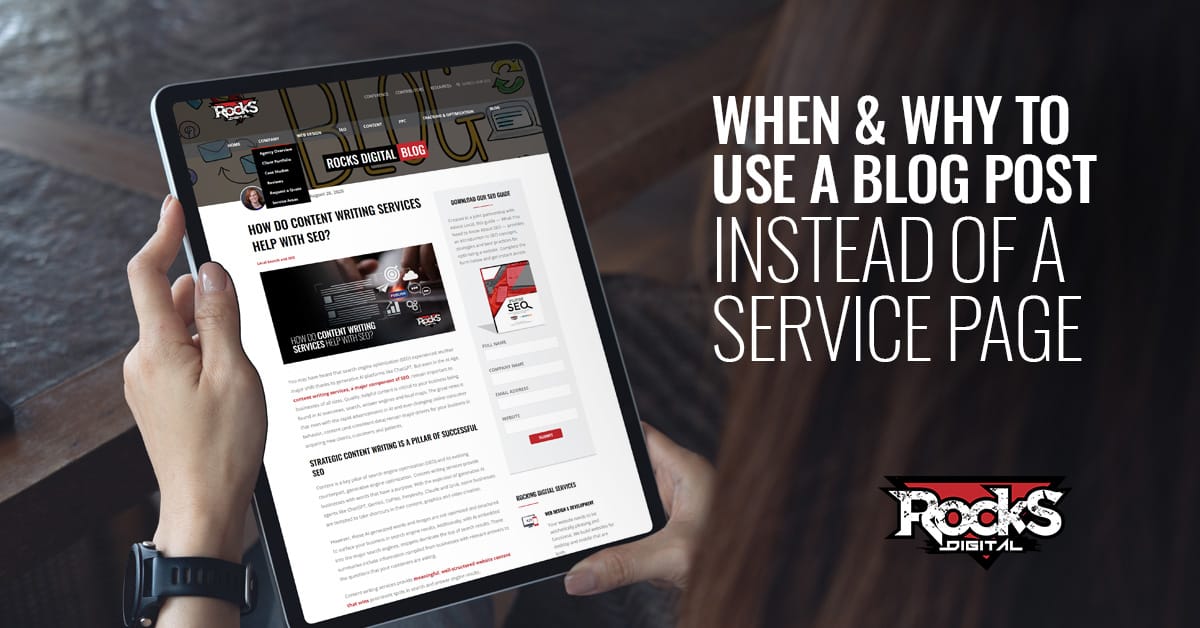
In the world of SEO, content is king. Quality content writing makes the difference in successful optimization campaigns that result in higher search engine rankings. Helpful, local-focused content is the key to helping businesses stand out from the competition. Blogs and service pages are the most common content created for this purpose, but which format is best? Let’s look at when and why to select one versus the other.
What Are the Main Differences Between Blogs & Service Pages
Blogs and service pages are both tools in your local SEO toolbox to attract, inform and engage potential customers, capturing the attention of algorithms and robots too. Both explain who you are, where you do business, and how your business solves immediate issues or improves lives. Each is an example of meaningful, valuable website content, but they differ in intent and immediate aim.
A blog post is typically long-form content that helps consumers learn about a topic in your area of expertise, make educated comparisons, or figure something out. These establish your credibility, increase your visibility and build trust over time—these are a longer sell.
Service pages are for consumers who intend to make a more immediate decision to hire your organization to provide services, or to buy from you. It is usually shorter and more direct, including a clear call to action that may be repeated on the page, such as “fill out the form,” “download this resource,” “book a call” or “get access to….”
Each one plays well in specific instances—let’s see how.
When Is Writing a Blog Post the Better Option?
Blog posts present an excellent opportunity for you to provide good, keyword-rich information and education to local audiences. Topics can be broad or niche, and must be valuable in any case. Blogs are the best option when you’re looking to do the following.
Provide Information
Think about headlines you’ve seen that announce the intent to answer questions. Such headlines will begin with how, why, or when to… or when a post is listed as a guide, it will share tips, review a checklist or provide examples. When you write about these questions and topics, it’s the perfect time for a blog post.
Help Research
Consumers can spend a significant amount of time researching before they choose a service provider or decide to buy. While they may not be ready to purchase just yet, your content can help them choose you. Think about posts that answer these questions.
- How much does [x] cost?
- What is the best…?
- The pros and cons of…
- Is [x] worth it?
- “Versus” posts
This information walks them closer to you.
Give Tools
The information in these blogs must be useful and substantive. Consider including step-by-step instructions, screenshots, thorough examples, a thoughtful framework for understanding, or templates. Tangible items that solve an issue go a long way in a long sale.
Handle Objections
Your information is valuable, and blogs help consumers and patients understand that. Content that educates can discuss timelines, pricing structures, potential results, possible risks, and help answer the inevitable question, “Will this work for my [situation]?” While it may initially seem negative, this can make you a hero.
Make the Algorithm Work in Your Favor
Blog posts give you the opportunity to gain favor with consumers and search engines. This comes through having long-tail keywords in your posts that can show in Google’s “People Also Ask” questions, AI overviews and answer engines as well. These are additional, more targeted questions that appear in search and can funnel your post as a link or an answer. This information usually comes from answering questions that could clutter up or overwhelm a service page.
Build Authority
All of this allows you to build authority in your industry with people, search engines and now, generative AI. The good news is that a blog post can support a service page—it’s a great strategy.
The Benefits of Writing Supporting Blog Posts
Blogs are beneficial in multiple ways. For instance, a supporting blog post can strengthen a service page in the following ways.
- Internal Linking – Internal links provide helpful information, keeping consumers on your site longer. A supporting blog can send traffic to the relevant service page.
- Keyword Targeting, but Keeping the Service Pages Focused – Detailed information is at home in blogs. Keep your service page clean and conversion-focused.
- Authority Building – When multiple helpful blogs link to a particular service page, it can signal depth and expertise around that service.
- Relationship Building – You don’t have to go in cold. Blogs are an introduction that provides information, guiding prospects to the service page when they’re ready to act.
- Earning Backlinks – People share and link to guides or tips more than they do to sales pages. These links are valuable for building the website’s authority.
Because blogs have an incredible ability to reach both people and search engines, that makes them ideal in many cases.
When Is a Service Page the Better Choice for a Website?
Service pages are important to businesses of all types. This is what introduces what you do well to your potential customers, clients or patients. Service pages discuss what you do, why the person needs your product or service, and why your business is the best choice. Service pages have a clear path to a conversion, such as calling the business, completing a website form or buying now.
The searches that land on a service page from search results typically have strong purchasing intent with an air of immediacy. They may include words like “services,” “agency,” “company,” “near me,” “quote,” or “pricing for [service].” These are hot leads.
Your Website Needs Blog Posts and Service Pages
The best SEO agencies use blog posts and service pages, along with other key pages on a business’ website like FAQ pages, a resource page and more. All of these are key components of a successful SEO strategy to get the traffic you want to your website.
Get High-Quality, Authoritative Content Writing Services
Rocks Digital is a trusted, people-powered SEO agency that gets great results for clients with quality content that makes their business stand out online. We know what gets people to see you, and keeps them coming back. To put our experience to work for you, request a website evaluation or call us at (214) 989-7549.